War is full of logistical challenges, one of the major concerns — in conflicts both ancient and modern — being how to feed the armies doing the fighting. Whether it’s Roman legionaries, British Redcoats, or modern infantry, soldiers have always needed a reliable supply of food to maintain both their energy levels and morale. As the old saying goes, “An army marches on its stomach.”
Military rations have existed since at least the time of ancient Rome, when soldiers received 2 pounds of bread a day, sometimes with meat, olive oil, and wine. Today, U.S. troops are provided with MREs — “Meals, Ready-to-Eat” — which are carefully tested, formulated, and packaged rations designed to sustain soldiers during training and military operations. These MREs have a shelf life of three years and can survive being dropped from an aircraft. But not every soldier is a fan of these pouches of food, which they sometimes refer to as “Meals, Rarely Edible” or “Meals Rejected by the Enemy.”
While modern MREs don’t often come with glowing reviews, some foods created specifically for soldiers — or adopted and popularized by the military — have become beloved by the civilian population. Here are six foods that managed to find their way from the ration pack to supermarket shelves across America.
M&Ms
In the 1930s, Forrest Mars Sr. (the son of Mars founder Franklin Clarence Mars) was traveling in Europe. According to confectionary legend, it was during this time that Forrest Mars observed soldiers eating chocolate pellets surrounded by a sugar shell during the Spanish Civil War. Inspired, he took the concept back to the United States where, in 1941, M&Ms were born.
With World War II already underway, M&Ms were initially made specifically for the U.S. military, providing an ideal way for soldiers to carry energy-rich chocolate in tropical climates without it melting. In 1947, the candy was made available to the public, and its popularity has never waned since.
Cheetos
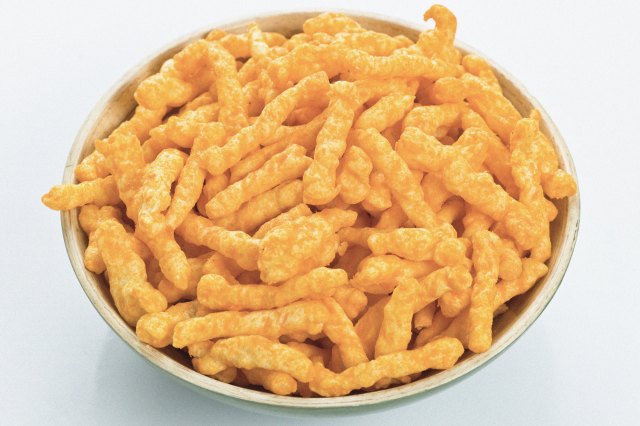
Cheesy puff snacks and the chaos of warfare may seem diametrically opposed, but it’s the military we must thank for the former’s existence — including the top-selling brand, Cheetos. Their origin can be traced back to the Natick Soldier Systems Center, a U.S. Army research complex responsible for the development of the U.S. military’s food, clothing, and shelters.
One of the items to come out of the research complex was processed and powdered cheese, which was created for military use in World War II. According to Anastacia Marx de Salcedo, author of Combat-Ready Kitchen: How the U.S. Military Shapes the Way You Eat, by the end of the war “a whole little industry had sprung up to support this dehydrated cheese.” And one of the very first products to use the cheesy powder was the now-ubiquitous Cheetos.
Instant Coffee
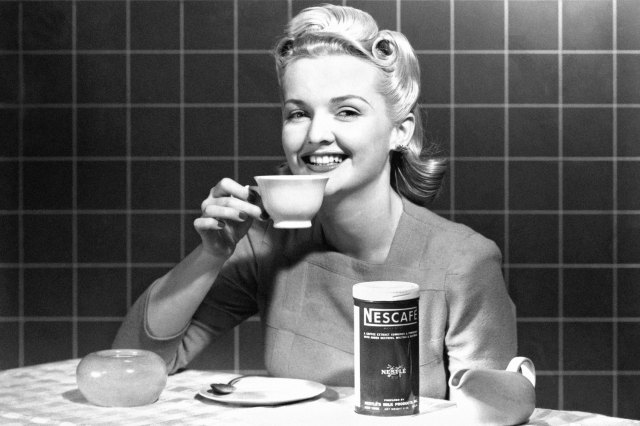
Instant coffee isn’t a modern invention — it was created and patented as a “coffee compound” by an Englishman named John Dring in 1771. It later appeared in cake form during the American Civil War, before being refined by Japanese chemist Satori Kato, whose soluble coffee was introduced to the public at the Pan-American Exposition of 1901.
Instant coffee as we know it today became commonplace during World War I, providing a quick and easy taste of home for soldiers on the front lines. The Department of Defense began buying as much as 37,000 pounds of coffee powder each day, at which point the instant coffee industry skyrocketed. Then, in 1938, Nestlé introduced its new product, Nescafé. With the outbreak of World War II, Nescafé was included in the emergency rations of every U.S. soldier, further cementing the popularity of the instant brew.
Minute Maid
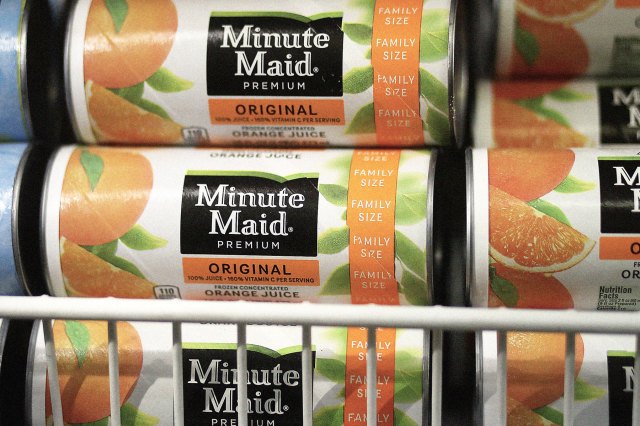
In 1942, the U.S. Army offered a lucrative contract to any company that could figure out a process for producing palatable frozen orange juice — deemed necessary for keeping vitamin C levels at acceptable levels among the troops. It wasn’t until 1945 that a viable process was created, at which point the Florida Foods Corporation won the contract to produce 500,000 pounds of orange juice concentrate.
However, the war ended before the product was shipped. Finding itself sitting on a giant mound of oranges, Florida Foods changed its name to the Vacuum Foods Corporation a year later and began selling the nation’s first concentrated frozen orange juice, which it called Minute Maid (in reference to the product’s quick and easy preparation). Despite initially slow sales, Minute Maid eventually took off — with the help of a catchy jingle from Bing Crosby — paving the way for similar frozen products.
TV Dinners
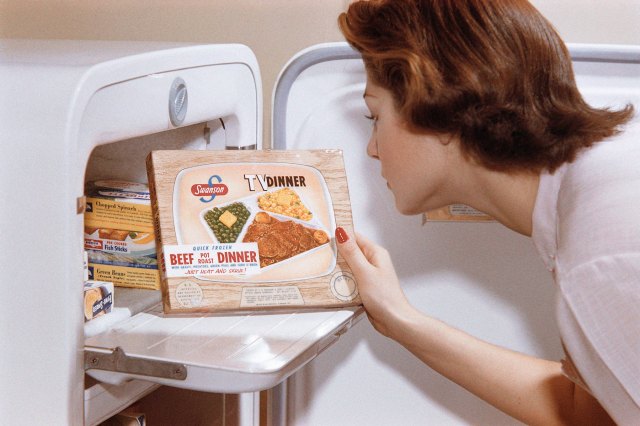
The first successful frozen prepackaged meal — what was later dubbed the “TV dinner” — hit supermarket shelves in 1953. Produced by Swanson, it was a Thanksgiving meal of turkey, cornbread stuffing, and peas. But while Swanson took TV dinners to the masses, the concept was originally developed for the military.
In 1945, Maxson Food Systems manufactured the first complete frozen meal — known as “Strato-Plates” — specifically to be reheated for troops and other passengers on long military flights. A typical meal was a basic three-part combo of meat, vegetable, and potato, each housed in its own compartment on a plastic plate. Maxson’s frozen meals never made it to the civilian retail market, but they were the precursors of the TV dinner, despite no TVs being involved.
Spam
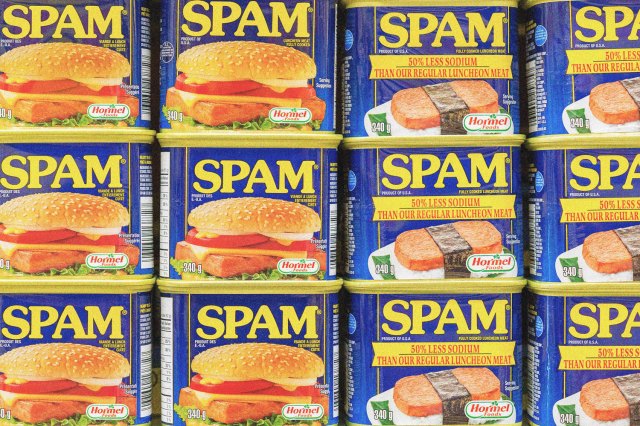
Though Spam wasn’t invented specifically for the military, war rations certainly helped popularize it. When Spam was created in 1937 by Hormel Foods Corporation, it was seen as a way to increase sales of unprofitable pork shoulder, which was then considered an undesirable cut. Initially, sales of Spam were poor, partly because people had doubts about canned meat being safe for consumption. Then World War II began, and the U.S. military saw Spam as a perfect addition to its soldiers’ rations, being affordable, filling, easily portable, and shelf stable.
Spam accompanied U.S. troops all over the world, with 100 million cans shipped out to the Pacific theater alone. It became something of a culinary icon during the war, and went on to become an enduring supermarket staple — today, more than 9 billion cans of Spam have been sold.
Creamed chipped beef on toast, know to GIs as ‘s—t on a shingle’ (thus SOS) was a standard meal. A mess hall might be known for how palatable they made it (my father was a GI cook and bragged about mess halls he worked in)… RESIST!
Re: What, no SOS?
Posted by jacque on January 19, 2026, 3:17 am, in reply to "What, no SOS?" Valued Poster
This was definitely one of those war time meals my family and my wife's family grew up on.
Chipped beef on toast was on the school lunch menu occasionally. But SOS was served at home. A mild corned beef with a lightly seasoned white gravy on slice of bread untoasted but sometimes toasted depending on the flair and sides you would add to this fancy feast.
With mashed potatoes it was like open faced beef (turkey) sandwich.
We most certainly had most the items mentioned in the article at some time if not regularly.
SPAM is a made in MN staple. And ironically loved in HI.
A random aside. My mention of school lunch reminded me of another popular school lunch (in my parts). Pizzaburgers! I loved telling my friends who scoffed at SPAM that one of their favorite lunch items used minced spam to make the ground beef and sauce taste like 'pizza'.
If you are watching your salt intake a little bit of spam goes a long way. (I recommend the reduced sodium for the original)
A Jack of all trades is master of none, but oftentimes better than a master of one.
... And many thanks for the masters in skill for setting our standard of work to instill.
I used to skip those lunches and save the money for cigarettes
Posted by Sia on January 19, 2026, 12:25 pm, in reply to "Re: What, no SOS?" ADMIN
In one of the high schools I attended there was a smoking area for 18 yr old students. But every school had a place to gather regardless of age or the smoke B-)_~
In junior high I saved lunch money for chocolate bars or hostess cakes like ding dongs or swiss rolls to buy on my way home after school.
Later it was smoking money sometimes.A Jack of all trades is master of none, but oftentimes better than a master of one.
... And many thanks for the masters in skill for setting our standard of work to instill.
Is that popular?
Posted by Sia on January 18, 2026, 11:40 am, in reply to "What, no SOS?" ADMIN
Heh…probably not.
Posted by greenman on January 18, 2026, 12:49 pm, in reply to "Is that popular?" Valued Poster
But it was common, at least at one time! RESIST!
I dont think i ever had it. its made with cream or milk, yes?
Posted by Sia on January 18, 2026, 1:05 pm, in reply to "Heh…probably not." ADMIN
I'm lactose intolerant as are half of my family. So my Mum would never made it.
Posted by Pikes Peak 14115 on January 18, 2026, 5:00 pm, in reply to "Yeah, a milk gravy " ADMIN
Like tuna salad on a slice of old stale bread, only with old chipped beef as the meat. Not quite jerky. It might have been a way to reconstitute bread. The meat was pretty old too.
On a tray it was hard to tell whether it had yet to be eaten, or vomited.
After SOS, Spam was a delicacy. You can look away from a painting, but you can't listen away from a symphony

 on January 17, 2026, 3:47 pm